
If you are behind on your mortgage payments, three options can get you out without a foreclosure on your record: a short sale, a deed in lieu of foreclosure, or a cash sale to a direct buyer. Each one works through a different mechanism, takes a different amount of time, and leaves your credit in a different place. The right choice depends on how far underwater you are, whether your title is clean, and how much time is left before the lender begins formal proceedings.
What each option actually does
A short sale is a sale to a third-party buyer at a price lower than the mortgage balance, with the lender's written approval. The lender agrees to accept the short proceeds as satisfaction of the loan. You walk away with nothing, and the lender takes whatever the house sold for. The lender usually, though not always, waives the remaining deficiency.
A deed in lieu of foreclosure skips the buyer entirely. You sign the title directly over to your lender. The mortgage is extinguished, and the lender becomes the new owner. There is no listing, no agent, and no showing schedule. Some lenders pay a small moving allowance when they accept a deed in lieu, sometimes called cash for keys, though this is negotiated and not guaranteed.
A cash sale to a direct buyer is a private sale at a negotiated price, paid in cash, closing in 7 to 14 days. At closing, the mortgage is paid from the sale proceeds the same way any other home sale works. If the proceeds cover the mortgage balance, no lender approval is needed for the transaction itself. If the price falls short of the loan balance, you would need a short payoff approval from the lender, which is the same review process as a short sale but with a committed, ready buyer already at the table.
How a short sale works, and why it takes so long
To start a short sale, you list the property with an agent, find a buyer, and then submit a hardship package to your servicer. That package typically includes a signed purchase contract, a hardship letter, two years of tax returns, two to three months of bank statements, and a broker price opinion supporting the offer price. The lender orders its own valuation and decides whether to accept the proceeds.
This process runs three to eight months with most servicers. During that entire period, each missed payment is recorded as a separate derogatory mark on your credit file. The lender is under no obligation to approve. If your hardship documentation is thin, or if the offer comes in below what the lender's review concludes the house is worth, they can decline and proceed to foreclosure instead.
On the deficiency question: if the lender's written approval letter specifically waives the deficiency, that debt is gone. If the letter is silent on the point, the lender may retain the right to sue you for the shortfall. California Code of Civil Procedure Section 580e, enacted in 2011 and amended in 2013, bars deficiency judgments after a lender-approved short sale on a 1-4 unit residential property. Most other states offer no such protection automatically. Outside California, the deficiency waiver must be negotiated and written explicitly into the approval letter before you accept the terms.

How a deed in lieu works, and when lenders say no
A deed in lieu moves faster than a short sale because no buyer is involved. Most lenders complete the acceptance process in 30 to 90 days once they receive the request. You submit a hardship package similar to a short sale application, the lender does a title search and a property valuation, and if they agree to take the deed, you sign it over at a notary. The mortgage is satisfied and the lender becomes the owner.
The title requirement is the main hurdle. A lender will not accept a deed in lieu if the title carries any encumbrances. A second mortgage, a home equity line, an HOA lien, unpaid property taxes, or a judgment recorded against you makes the deed in lieu unavailable. The lender does not want to inherit those junior claims. They will redirect you to the short sale process instead, where those liens can be negotiated as part of the closing.
Lenders also generally will not accept a deed in lieu if you have equity. If the house is worth more than you owe, the lender expects you to sell it and pay off the loan from the proceeds. The deed in lieu is a tool for genuinely underwater situations, where the lender accepts the property in satisfaction of a debt it cannot otherwise fully recover.
Credit-wise, a deed in lieu is treated similarly to a foreclosure by most scoring models. The record stays for seven years from the date of first delinquency. A short sale reported as "settled for less than full amount" carries similar weight over the same window. Neither is clean on paper, but both typically score better than a completed foreclosure at a public auction.
Side-by-side comparison
| Short sale | Deed in lieu | Cash sale | |
|---|---|---|---|
| Who approves it | Lender must approve buyer and price | Lender must accept the deed | No lender approval needed unless proceeds fall short of balance |
| Typical timeline | 3 to 8 months | 30 to 90 days | 7 to 14 days |
| Clean title required | No; junior liens negotiated at closing | Yes; lender rejects if any liens exist | Liens paid off from proceeds at closing |
| Works when underwater | Yes | Yes | Only with lender short payoff approval |
| Credit impact | Severe; derogatory for 7 years | Severe; treated like foreclosure for 7 years | None if sold before any delinquency; otherwise limited to delinquencies already accrued |
| Cash to seller | Usually zero | Small moving allowance, sometimes | Whatever proceeds exceed the payoff and closing costs |
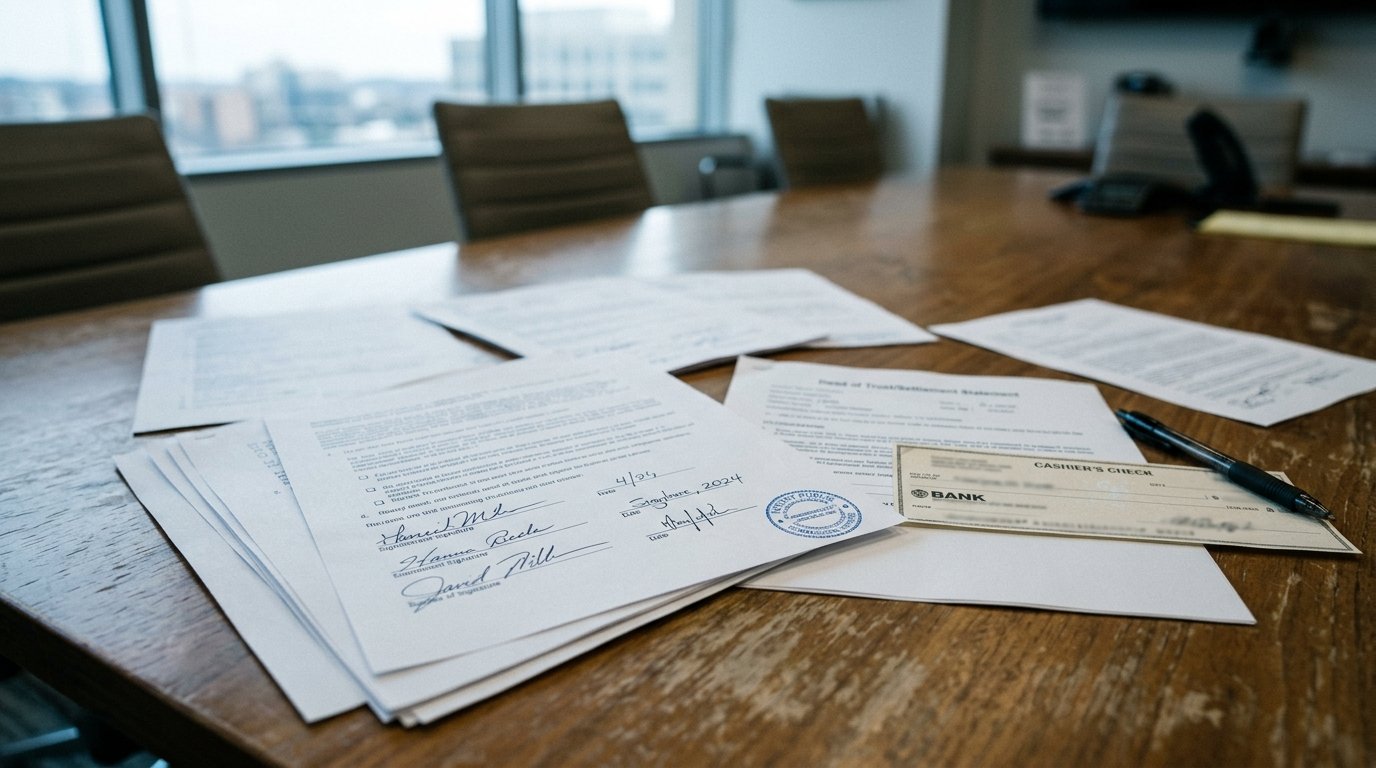
The deficiency question: what happens to the debt the sale does not cover
A deficiency is the gap between what the sale covers and what you owed. If you owed $310,000 and the lender accepted $260,000, the $50,000 deficiency is a real debt unless it is formally waived. What happens to it is not automatic; it depends on state law and what is written in the approval documents.
- Short sale: Negotiate a deficiency waiver into the lender's written approval letter. California CCP 580e makes this automatic for first-lien short sales on 1-4 unit residential property. Most other states require you to negotiate the waiver explicitly.
- Deed in lieu: Most lenders include a deficiency waiver in the deed in lieu agreement as the consideration for you voluntarily handing over the deed. Confirm the waiver language is in the document before you sign.
- Cash sale: If proceeds cover the full payoff, there is no deficiency. If you are negotiating a lender short payoff, the same waiver discussion applies.
A waived deficiency may be taxable as cancellation-of-debt income under federal law. IRS Publication 4681 covers cancelled debt, foreclosures, and repossessions, including the Qualified Principal Residence Indebtedness exclusion. The rules on whether that exclusion applies depend on current tax law and your specific situation. Consult a tax professional before you agree to any deficiency waiver so you know whether the forgiven amount will appear on a 1099-C and what you might owe on it.
A worked example
Household A: house has equity, but payments are three months late.
House worth $340,000 on the open market. Mortgage balance: $262,000. Three months of missed payments at $1,900 per month have accumulated $5,700 in arrears, plus late fees.
The lender will not approve a short sale or deed in lieu because there is equity. They expect a sale. Listing with an agent at $340,000 and waiting 60 to 90 days might net roughly $319,000 after a 6 percent commission, but three more months of missed payments and accruing fees reduce the actual net. If the retail deal closes at month four, the total cost of those additional missed payments is around $7,600, leaving a net closer to $311,000.
A direct cash sale closes in 14 days. The offer is $288,000, reflecting the as-is condition and fast close. Proceeds: $288,000 minus $262,000 payoff, minus $4,200 in title and escrow costs, equals $21,800 to the seller. If the close happens before the seller hits 90 days delinquent, the worst credit damage is limited to what has already accrued. The retail path nets roughly $311,000 over four months if nothing delays the deal. The cash path nets $21,800 in 14 days with certainty. The $289,000 gap is real, and the cash sale is not the higher-dollar answer. But for a seller who cannot continue making payments and cannot risk a four-month listing with an uncertain outcome, the cash close stops the bleeding immediately.
Household B: house is underwater by $45,000.
House worth $250,000. Mortgage balance: $295,000. The seller is four months behind. A cash sale at $215,000 requires the lender to approve a short payoff of $80,000. This is the same hardship review as a formal short sale. The practical advantage of the cash route in this case is a committed buyer: the lender's review addresses a real, executable offer rather than a property sitting on the market waiting for a buyer who may or may not appear. Whether that speeds the lender's decision depends on the servicer. Some move faster with a buyer in hand. Others process at the same pace regardless.
How timing changes the credit picture
The credit impact of a short sale and a deed in lieu is largely determined by how many payments were missed before the transaction closed, not by which option was chosen. A seller who closes a cash sale before the first missed payment has no negative mortgage entry on their credit file. A sale is not a derogatory event; it does not appear on a credit report.
Once delinquency starts, each 30-day increment is a separate mark. The question becomes not whether your credit will take a hit, but how large that hit grows and how quickly you can stop adding to it. A 14-day close limits the damage to whatever has already accrued. A six-month short sale process adds six more months of missed payments on top of whatever delinquency already exists at the time you list.
For sellers working through what to do when payments fall behind, the window between the first missed payment and the fourth is where the cash sale carries the clearest timing advantage. After six or more months of delinquency, the credit outcomes across all three options start to converge, because the delinquency marks accumulated along the way become the dominant factor, not the type of exit chosen.
Who should not take a cash sale
A direct cash offer typically runs 15 to 25 percent below a fully marketed retail sale. That is a real cost and not the right trade in every situation.
- If your house is in good condition, you have meaningful equity, and you have two or more months before the lender begins formal proceedings, a traditional listing will likely net you more. The question is whether the additional proceeds exceed the cost of continued missed payments and the risk of a retail deal falling through.
- If you are deeply underwater and the lender will not approve a short payoff at the price a direct buyer would offer, you need the formal short sale process. A cash buyer cannot bypass a servicer that refuses the short payoff amount.
- If the delinquency is temporary and you qualify for a forbearance or loan modification, staying in the house is almost always the better financial outcome. CFPB Regulation X (12 CFR 1024.41) requires servicers to evaluate all loss mitigation options before beginning any foreclosure proceeding. Contact your servicer's loss mitigation department to ask what options are available before committing to any sale path.
A HUD-approved housing counselor can help you evaluate these options at no cost. The CFPB lists approved counselors at consumerfinance.gov/find-a-housing-counselor, searchable by zip code. For the deficiency and tax questions, a real estate attorney familiar with your state's statutes is worth the consultation fee before you sign anything.
Common Questions
Is it better to do a short sale or a deed in lieu?
It depends on the title. If there are second mortgages, HOA liens, or judgment liens on the property, a deed in lieu is not available because lenders will not accept a deed that carries encumbrances. In that case, a short sale is the only lender-approval path. If the title is clean and you are genuinely underwater, a deed in lieu is typically faster, often closing in 30 to 90 days versus three to eight months for a short sale. The credit outcome is similar either way.
Will I owe money after a deed in lieu of foreclosure?
Possibly. The deficiency is the difference between the mortgage balance and the property's value when the lender takes it back. Most lenders include a deficiency waiver in the deed in lieu agreement as the condition of accepting the deed, but that language must be in the written agreement. If the document does not include a waiver, the deficiency may remain collectible depending on your state's laws. Get the waiver in writing before you sign.
How long does a deed in lieu or short sale stay on your credit?
Seven years from the date of first delinquency for both. A deed in lieu is typically reported as "deed in lieu of foreclosure" and is treated by most scoring models similarly to a foreclosure. A short sale usually appears as "settled for less than full amount," which carries similar weight. Neither produces a clean credit record, but both are generally treated as a lesser negative than a completed foreclosure at public auction.
Can you sell a house that is already in foreclosure?
Yes. In most states you can sell the house at any point before the foreclosure sale date. A cash close can happen well inside the timeline of most foreclosure proceedings, which typically run four to eighteen months depending on whether the state uses a judicial or non-judicial process. See our breakdown of how foreclosure works and the state-by-state timelines for context on how much time you are likely working with.
Do cash buyers purchase homes with delinquent mortgages in states like Vermont?
Yes. Trusted Homebuyers USA buys in all 50 states and Washington, D.C., including Vermont. A delinquent mortgage does not prevent a cash sale; the arrears and any servicer fees are simply included in the payoff amount at closing. You receive the net proceeds after the full mortgage payoff and closing costs are settled.
If a cash offer gives you useful information about your options, call 208-540-8257 or request a written offer here. There is no obligation, and the number gives you a concrete baseline for comparing against what a short sale or deed in lieu would actually produce.