
You can sell a hoarder house. The question is not whether a sale is possible, it is whether to pay for the cleanout before you list or sell it as-is and let the buyer handle what is inside. Most people who contact us have already gotten a few contractor quotes and found the cost is bigger than they expected.
The core problem for a traditional sale: conventional lenders will not finance a property that fails their minimum property requirements, and most hoarder houses do. That removes a large portion of buyers before the listing goes live. A cash buyer has no lender in the transaction, so the inspection and appraisal conditions that kill financed deals do not apply.
Why Conventional Lenders Reject Hoarder Properties
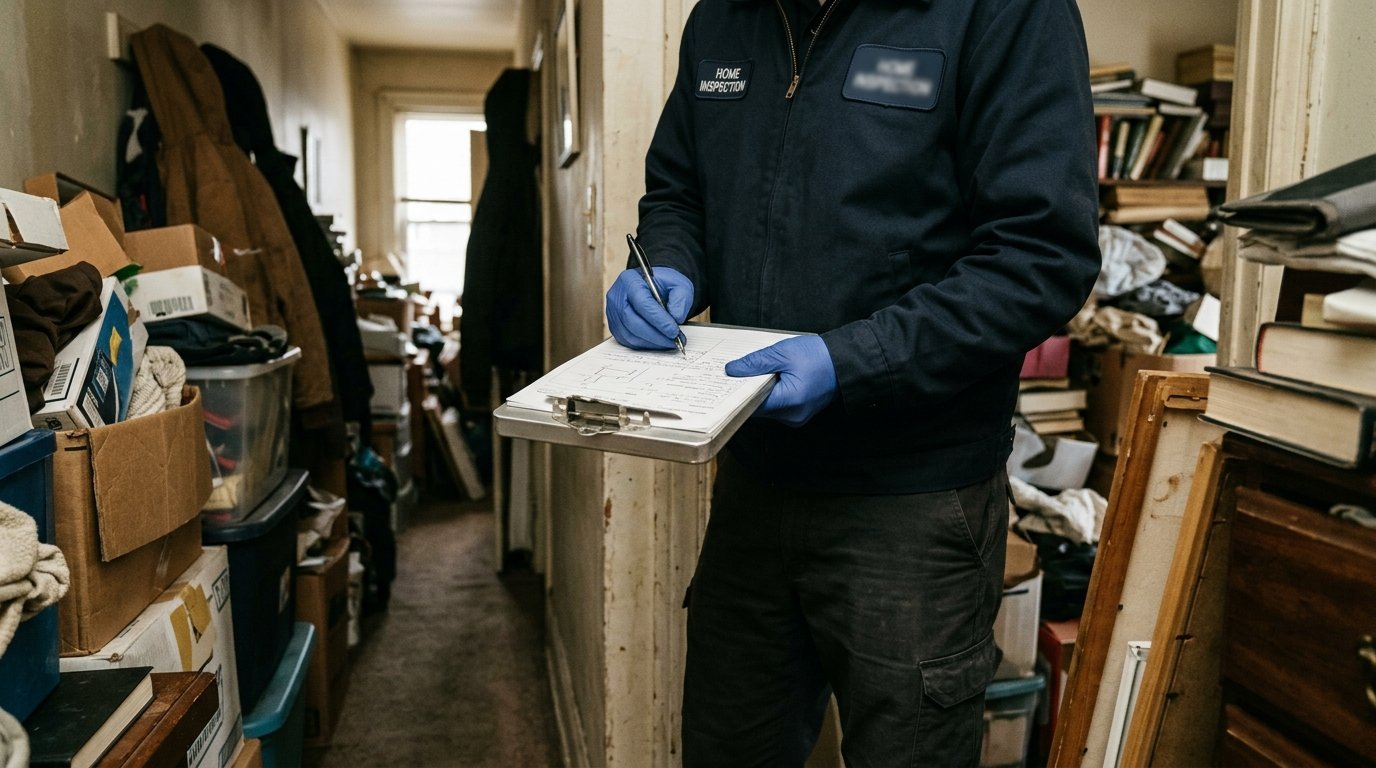
The FHA appraisal standard is codified in HUD Handbook 4000.1, Section II.A.8, under Minimum Property Requirements. Before FHA can back a loan, an FHA-approved appraiser must certify the property is safe, sound, and sanitary. Hoarder properties regularly fail on all three counts:
- Blocked egress routes. Stacked materials blocking windows or doors used as emergency exits are a documented deficiency under HUD 4000.1. The appraiser flags it and the loan stops until the condition is resolved and re-inspected.
- Pest infestation. Rodents and insects are common in properties with years of accumulated organic material. Visible evidence during an FHA appraisal requires documented extermination and clearance before the file can move forward.
- Mold and moisture damage. Accumulated material traps humidity against walls and floors. EPA guidance (EPA Publication 402-K-02-003) draws the remediation line at 100 square feet before a licensed contractor is required, but an FHA appraiser who sees visible mold halts the appraisal regardless of square footage.
- Structural load. Floors carrying several tons of accumulated material for years sometimes show signs of deflection or damage to joists. A flagged structural concern requires a licensed engineer's report before the loan can be underwritten.
VA loans carry equivalent requirements under Chapter 12 of the VA Lender's Handbook, which mirrors FHA's MPR language on safety, soundness, and sanitation. Conventional loans through Fannie Mae and Freddie Mac set less prescriptive property standards, but a lender's own appraiser still has discretion to flag conditions, and most do when the situation is severe.
FHA and VA together represent a substantial share of the purchase market in any given year. A property that cannot pass either appraisal loses a large portion of buyers before the listing even attracts attention. Add buyers with conventional pre-approvals whose lenders still have property conditions, and the effective pool for a hoarder house in as-is condition is almost entirely investors and cash buyers.
What Cleanup Actually Costs Before You Can List
The "clean it up and sell retail" plan often breaks down when the line items come in. The numbers depend on volume and severity:
| Item | Typical range | Notes |
|---|---|---|
| Junk removal and hauling | $3,000 to $15,000 | Scales with cubic yards. Severe cases fill 10 or more 20-yard dumpsters. |
| Biohazard remediation | $2,000 to $30,000 | Required when animal waste, decomposing food, or unsanitary material is present. Specialized disposal certification required. |
| Mold treatment and clearance | $1,500 to $15,000 | Includes air sampling, remediation, and post-clearance testing to satisfy FHA or VA re-inspection. |
| Pest extermination | $500 to $4,000 | Multiple treatments typically required. Lenders need documented clearance. |
| Basic cosmetic work | $5,000 to $20,000 | Flooring replacement, painting, basic fixtures. Assumes no structural damage found. |
A moderate case, one where the house is full but not biohazardous, typically runs $12,000 to $30,000 before any cosmetic work. A severe case with years of organic accumulation, animal waste, and secondary moisture damage can reach $60,000 or more before the property is in listable condition. Those figures assume the scope does not expand once the cleanout crew gets inside, which it often does.
A Worked Example: Louisville, Kentucky at a $270,000 ARV
Take a three-bedroom, two-bathroom house in Louisville with an after-repair value of $270,000. The owner has lived there for 30 years. Accumulation is moderate to severe: no biohazard, but full junk removal, mold treatment, and light cosmetic work are required before the property can attract a financed buyer.
Path A: Clean, repair, and list through an agent
- Junk removal and cleanout: $9,000
- Mold treatment and clearance: $4,500
- Cosmetic repairs (flooring, paint): $14,000
- Agent commission at 5.5 percent: $14,850
- Carrying costs during cleanup (4 months, mortgage plus utilities): $5,600
- Seller closing costs: $2,700
- Total deductions: $50,650
- Net to seller: approximately $219,000
Path B: Sell as-is to a cash buyer
- Cash offer at 65 to 70 percent of ARV for this scope of work: $175,500 to $189,000
- No cleanup costs, no commissions, no carrying costs during a 4-month process
- Net to seller: $175,500 to $189,000
The gap is roughly $30,000 to $44,000. That is the price of convenience, and it is real. What the example does not capture is execution risk. The $9,000 cleanout quote can revise to $18,000 once the crew finds rodent nesting inside the walls. A structural issue hidden under the accumulation adds further. Path A's net assumes everything comes in at quote, which in a severely impacted property it frequently does not.
What a Cash Sale Actually Means for the Contents
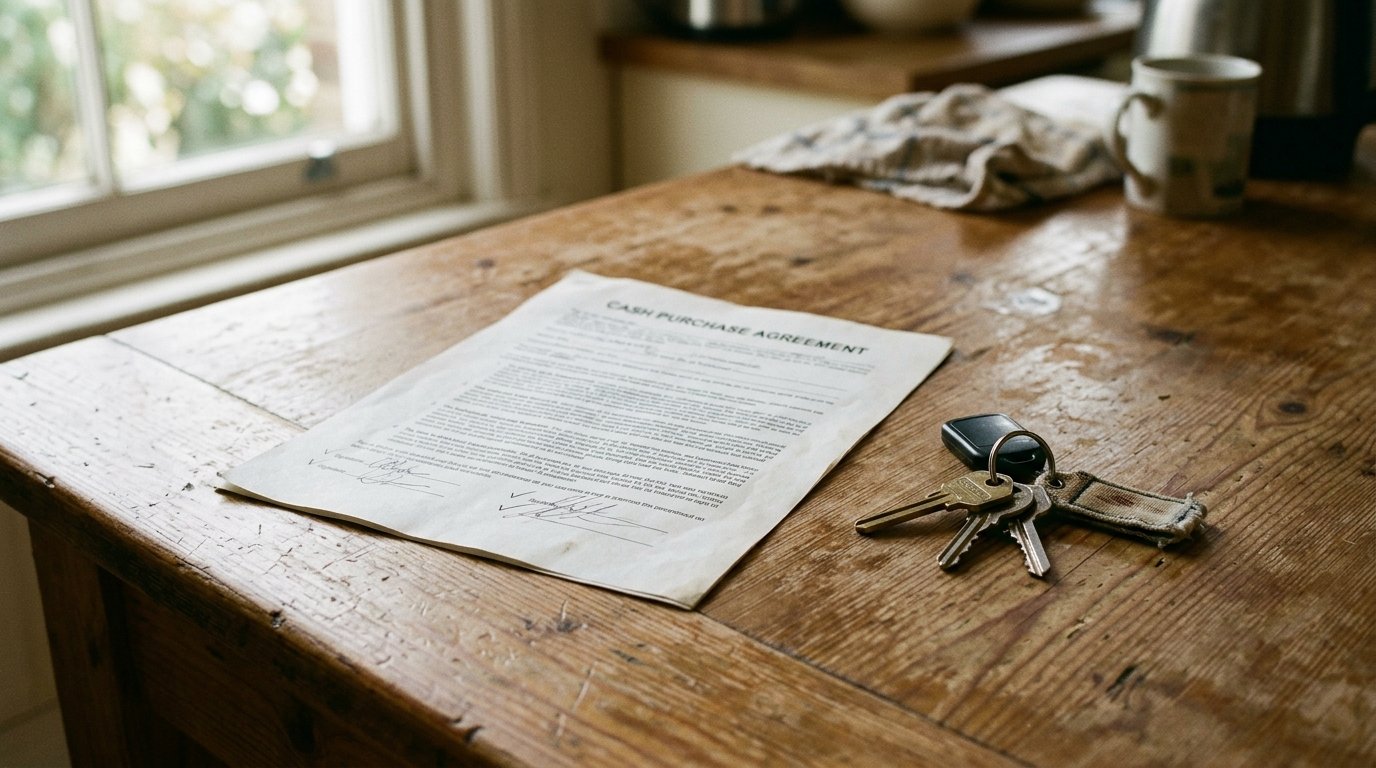
We buy as-is, contents and all. You take what you want and leave the rest. In an inherited hoarder situation, which is among the most common scenarios we see, the adult child who just finished settling the estate has no appetite to spend months arranging cleanouts across state lines. A cash close in 7 to 14 days with a single walkthrough is the practical option.
There is no inspection contingency in a cash transaction. There is no appraisal. We do one walkthrough to assess condition and price the work, make a written offer, and if you accept, we go to title. The 2-to-4-week extension that appraisal conditions add to financed deals does not exist in this process. If your situation involves an estate with multiple heirs, a title with a mortgage to pay off, or a property in another state, those factors affect timeline but do not change the structure of the sale.
Disclosure Law Still Applies in a Cash Sale
Selling for cash does not remove your disclosure obligations. In Kentucky, Kentucky Revised Statutes Section 324.360 requires residential sellers to complete a real property disclosure form covering known material defects. The form asks what you know: structural problems, water intrusion, pest infestation, code violations. A seller who has lived in the property for years has real knowledge that travels with the sale, regardless of whether the buyer is paying cash or using a lender.
Other states carry equivalent requirements. Texas Property Code Section 5.008 requires a seller's disclosure notice covering foundation, roof, plumbing, electrical, and drainage. Florida's duty to disclose flows from the Florida Supreme Court's ruling in Johnson v. Davis (1985), which established that sellers must disclose known material defects not readily observable by the buyer. California Civil Code 1102 mandates the Transfer Disclosure Statement for all residential sales, including cash. The mechanism is the same across states: if you know about a condition, you disclose it. Selling as-is shifts repair responsibility to the buyer; it does not shift disclosure responsibility. Speak with a local real estate attorney if you have questions about what applies in your specific state.
When a Cash Sale Is Not the Right Answer
A cash sale is not the right answer for every hoarder property. If the house is structurally sound under the accumulation, the cleanout alone brings it to listable condition, and you have 4 to 6 months to run the process and the energy to manage contractors, the gap between a cash offer and a listed sale price is real money. In the Louisville example, $30,000 to $44,000 is a meaningful amount to leave on the table.
The cash option makes sense when the cleanup cost is high and uncertain, when you cannot manage the logistics from a distance, when the property's underlying condition means it will struggle with FHA or VA appraisal even after a cleanout, or when a tight timeline makes a 4-month listing process impractical. If the house is in genuinely good condition, shows well, and you have the time, a traditional listing will almost always net more. That is the honest trade-off, and it is worth doing the math before deciding.
Common Questions
Does a hoarder house have to be cleaned out before closing?
Not in a cash sale. Trusted Homebuyers USA buys as-is, contents and all. You take what you want and leave the rest. In a traditional financed sale, the cleanout typically has to happen before the property can pass FHA or VA minimum property requirements, so for buyers using a mortgage it is almost always a prerequisite to closing.
Can you sell a hoarder house if there is mold or pest damage inside?
Yes. A cash buyer's offer accounts for the remediation cost. You are passing the cleanup responsibility to the buyer in exchange for a lower price. What the as-is framing does not change is your obligation under state disclosure law to report what you know about the property's condition. Known mold or infestation must be disclosed to any buyer, including a cash buyer.
How quickly can a hoarder house close with a cash buyer?
With a cash buyer and clear title, 7 to 14 days is realistic. The main variables are title search time and settlement scheduling. An estate situation with multiple heirs, a property with an existing mortgage to pay off, or a complicated title history can extend that, but most straightforward transactions close inside three weeks.
What percentage of value does a cash buyer pay for a hoarder house?
Offers are based on after-repair value minus estimated cleanup, remediation, and repair costs, minus the buyer's margin. For a moderate cleanout situation, that typically works out to 65 to 70 percent of ARV. Severe biohazard or structural damage cases fall lower. We provide a written offer within 24 hours of a walkthrough, so you have a number to put beside any contractor quotes you have already received.
If you want a written cash offer with no obligation, start at our offer page or call 801-421-4212. We buy in all 50 states and Washington, D.C., and we work with estate situations, inherited properties, and properties where the seller needs a fast close with no repair conditions. Our hoarder house page covers the full process if you want more detail before deciding.