
A reliable home buyer is one who closes on the number in the written offer, on the date in the contract, without renegotiating once you are too far committed to walk away. That is a narrower definition than most sellers expect. Reliability is not about good intentions. It is about whether the buyer has the funds and the contract structure to actually close.
Why Reliability Means Closing Certainty, Not Just Intent
The mechanism that makes a cash buyer more reliable than a financed one is not complicated. A cash buyer is using their own money, which means there is no lender underwriting file that can fall apart in the final week. A conventional buyer can fail to close for reasons that have nothing to do with how much they want the house.
A few things that kill financed transactions at the finish line:
- A second appraisal ordered by the lender comes in below the agreed price
- The buyer's debt-to-income ratio changes because their employer adjusts their hours
- The title search turns up a lien the seller did not know existed, which the lender treats as a reason to pause
- The property fails an FHA or VA minimum property requirement that was not flagged in the initial walkthrough
None of those kill a cash transaction. The cash buyer has already accepted the property in its current condition. There is no lender with a veto.
Direct Buyers vs. Wholesalers: The Difference That Matters Most
Not everyone who calls themselves a cash home buyer is actually buying with their own funds. A direct buyer closes on the property themselves and holds it after closing. A wholesaler signs a purchase contract with you and then sells that contract to a third party before the closing date. The wholesaler never actually owns the house. The money that closes your sale belongs to someone else, and the wholesaler's reliability depends on finding that person before the contract expires.
This matters because the person who called you is not necessarily the person whose money funds your closing. If the wholesaler's downstream buyer backs out, your contract can collapse at the last minute with no recourse against anyone with real funds.
The distinction shows up in one contract line: an assignment clause. A purchase agreement with an "and/or assigns" clause, or a blank space for "assignee," is a wholesaler contract. A direct buyer's agreement names the closing entity, and that entity is the one holding the funds.
Five Things You Can Verify Before You Sign
Most of what determines whether a cash buyer will close is visible before you sign a purchase agreement. These five checks take less than an hour and eliminate the majority of unreliable operators.
1. They can name the entity closing. Ask who will actually be on the deed at closing. A direct buyer gives you an LLC name or a corporate name you can look up. "We have a buyer for this" is a wholesaler answer.
2. Proof of funds is a real document. A bank or investment account statement showing the balance is what you are looking for. A letter from an LLC saying the entity has the funds to close is not proof of funds. It is a letter.
3. The earnest money deposit actually clears. A check that clears within three business days is a meaningful commitment. A promissory note or a check dated two weeks out is not.
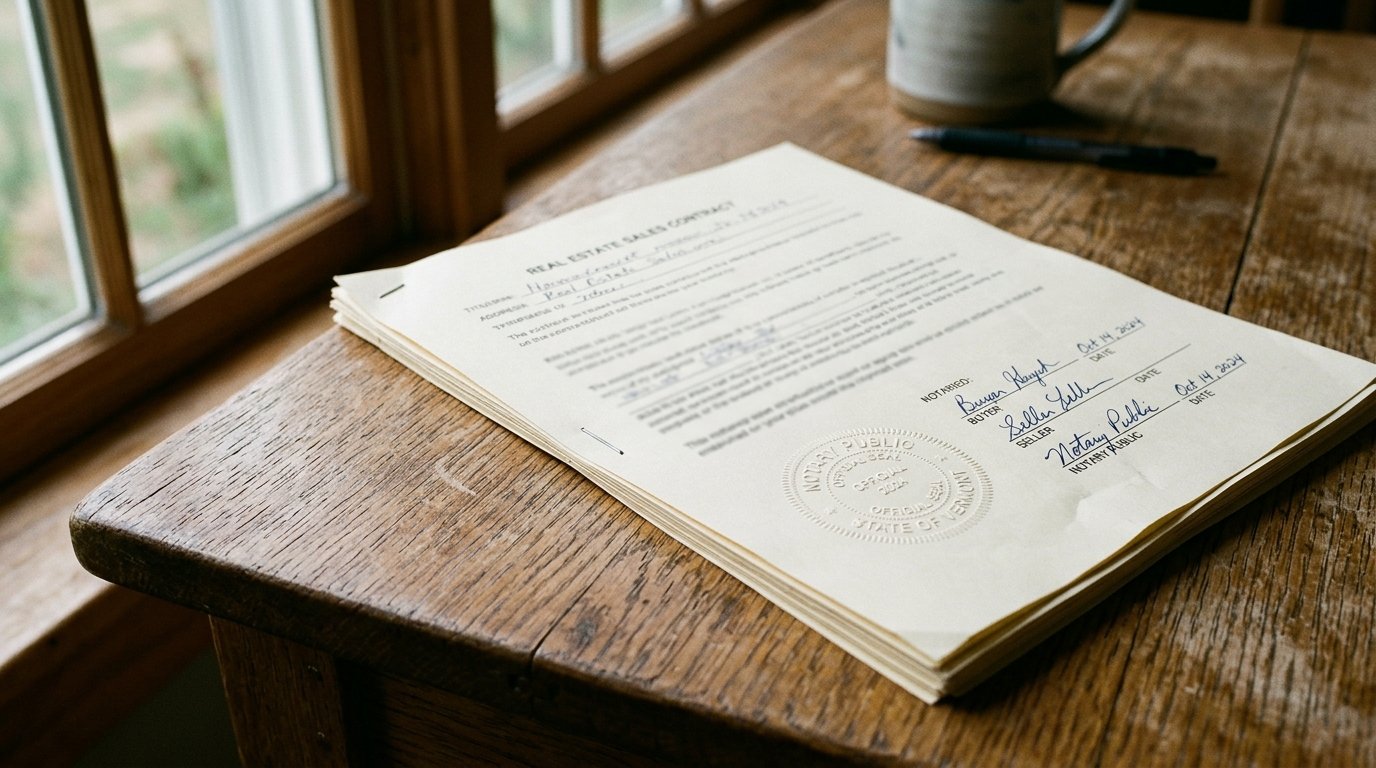
4. The contract has no assignment clause. Read the signature block on the purchase agreement. If it says "and/or assigns" next to the buyer's name, ask for it removed. A legitimate direct buyer will do that without argument.
5. The closing date is a date, not a range. "On or before 30 days" gives the buyer 30 days to renegotiate or walk. A specific date, with a clear earnest money forfeiture clause if the buyer cancels without contingency, is the structure that protects you.
A buyer who pushes back on any of these is telling you something about how they plan to close.
The Real Timeline: What 7 Days Actually Means
A cash sale with no repair contingency and no financing closes in 7 to 14 calendar days in most markets. That range is not a sales pitch. It is the actual time required to complete three tasks: ordering the title search (5 to 7 business days in most counties, longer in rural counties with smaller title plants), requesting the mortgage payoff quote from your lender (2 to 3 days from most servicers), and scheduling the closing attorney or escrow company.
There is no appraisal, no underwriting submission, no mortgage commitment deadline. The 7-day floor is real, but there is a floor. A buyer promising a 3-day close without checking the title search turnaround time in your specific county is overselling it.
Counties with smaller title plants, or properties with complex title histories, add days. A house that has changed hands multiple times, or that has had liens attached and released, takes longer to clear. A reliable buyer knows this and builds it into the contract date rather than promising a number they cannot guarantee.
For sellers with a specific deadline, a court date in a foreclosure case for example, the closing date in the contract is the number that matters. Confirm it is achievable before you sign, not after.

Who Should Not Sell to a Cash Buyer
A cash sale involves a discount. The buyer is accepting condition risk and carrying the cost of capital, and the offer price reflects that. If your house is in good condition, shows well, and you have the time to list it, the traditional market will almost always produce a higher gross number.
The comparison that matters is not cash offer vs. list price. It is cash offer vs. net proceeds after you subtract what a traditional sale actually costs: agent commissions (5 to 6 percent of the sale price), any credits negotiated after the inspection, closing costs you cover, and the carrying costs while the house sits on market (mortgage payments, insurance, and utilities for however many months). On a $300,000 house with a 60-day listing period, those deductions can reach $25,000 to $30,000 before you count anything unusual.
Cash makes sense when the house needs work that would kill financing or require large repair credits, when the timeline is fixed by a legal or financial deadline, when a title complication would unravel under lender scrutiny, or when the seller needs to close and move on without the uncertainty of a conditional sale. For a clean house with no urgency, a traditional listing is the better financial path for most sellers.
For a more detailed breakdown of when the numbers favor cash, see our post on the break-even repair number that changes the calculation.
What Happens If a Buyer Renegotiates Before Closing
It happens. A buyer quotes $290,000 and comes back at $265,000 two days before closing, citing inspection findings. If the original offer was as-is with no inspection contingency, that renegotiation is a breach of the purchase agreement, not an exercise of a contractual right.
Your options: hold the number and threaten to walk, counter at your original price, or accept the reduction. If the buyer cancels without a valid contingency, they forfeit the earnest money deposit in most states. You do not need a lawyer to walk away. You need one only if the buyer refuses to release the deposit.
The prevention is simple: confirm before signing that the offer is as-is with no inspection contingency. Most direct buyers have no problem putting it that way because they have priced the condition into the offer already. A buyer who insists on an inspection contingency on an as-is offer is leaving themselves an exit, not committing to a price.
Trusted Homebuyers USA is a direct buyer operating in all 50 states. As trusted home buyers, we do not assign contracts and every offer specifies a closing date and an as-is purchase. If you want a written offer for your property, you can request one at get-a-cash-offer.
For state-specific mechanics on timelines, tax rules, and what a cash offer nets in your market, see our pages by state, including Delaware and Maryland.
Common Questions
What is the difference between a reliable home buyer and a wholesaler?
A reliable direct buyer closes with their own funds and holds the property after the sale. A wholesaler signs a purchase contract and then assigns it to a third party before closing. The distinction matters because a wholesaler's ability to close depends on finding another buyer, which introduces a failure point a direct buyer does not have.
How do I verify a cash buyer's proof of funds?
Ask for a current bank or investment account statement showing a balance sufficient to close. A letter from an LLC or a "pre-approval" style document is not proof of funds. The statement should be dated within 30 days and show the account in the name of the entity listed on the purchase agreement.
Can a cash buyer back out after signing?
Yes, they can attempt to. The legal question is whether they had a contingency in the contract. If the purchase agreement was signed as-is with no inspection or financing contingency, a buyer who cancels without cause forfeits the earnest money deposit in most states. You are not required to renegotiate.
How fast does a cash home sale actually close?
Seven to 14 calendar days is a realistic range once both parties sign, assuming no title complications. The minimum is set by the county title search turnaround (5 to 7 business days in most areas) and the seller's mortgage payoff quote timeline (2 to 3 days from most servicers). A buyer promising 3 days without checking your county's title plant is guessing.
Which house buying company pays the most?
Direct buyers who hold properties pay more than wholesalers because they are pricing the deal for their own return, not for a downstream investor. The highest gross offer is not always the best net outcome. A cash offer 8 percent below list on an as-is house often nets more than a financed offer with a 3 percent inspection credit, 5.5 percent commission, and 45 days of carrying costs.