
Yes, you can sell a house with knob-and-tube wiring. There is no law against it, and no disclosure form says you must rewire before selling. The problem is narrower and more practical: knob-and-tube wiring cuts your buyer pool, and it cuts it in two separate places that most sellers and agents do not fully understand.
The first cut is insurance. Many major carriers will not write a new homeowner's policy on a house with active knob-and-tube wiring, or they require an electrical inspection and removal as a condition of binding coverage. Without insurance, a buyer's mortgage lender will not close. That rules out conventional, FHA, and VA buyers who run into insurance problems, not just appraisal problems.
The second cut is the FHA and VA appraisal. When an appraiser flags visible deficiencies under HUD 4000.1 Section II.A.8.a or VA Pamphlet 26-7 Ch.12, the loan file gets a required repair condition. The loan cannot close until that condition is cleared.
This post covers both mechanisms, the state-level variations that make them worse in some markets, what rewiring actually costs, and when a cash sale is the practical exit.
What Knob-and-Tube Wiring Is and Why It Became a Problem
Knob-and-tube wiring was the standard residential electrical system from roughly 1880 to the late 1940s. It runs as two separate conductors, hot and neutral, insulated with cloth and rubber, held away from framing by ceramic knobs and fed through ceramic tubes where the wire crosses a joist or stud. There is no ground wire. The insulation hardens and cracks over decades.
The electrical code issue is specific. NEC Article 394.12 prohibits knob-and-tube wiring in hollow spaces of walls and ceilings where those spaces contain loose, rolled, or foamed-in insulating material. That provision applies in almost every state because nearly all states adopt the National Electrical Code as the foundation of their electrical codes. When a homeowner adds attic insulation over old K&T runs, the wiring cannot shed heat the way it was designed to. That is the documented fire scenario.
Existing K&T that has not been covered or modified is typically grandfathered under NEC Section 90.3 and state codes that follow it, including Massachusetts 527 CMR 12.00 and Connecticut's adoption of NEC through the state building code. The code does not require removal unless you are doing new work in that area. But "not required to remove" and "easy to sell" are not the same thing.
The Insurance Problem Comes Before the Lender Problem
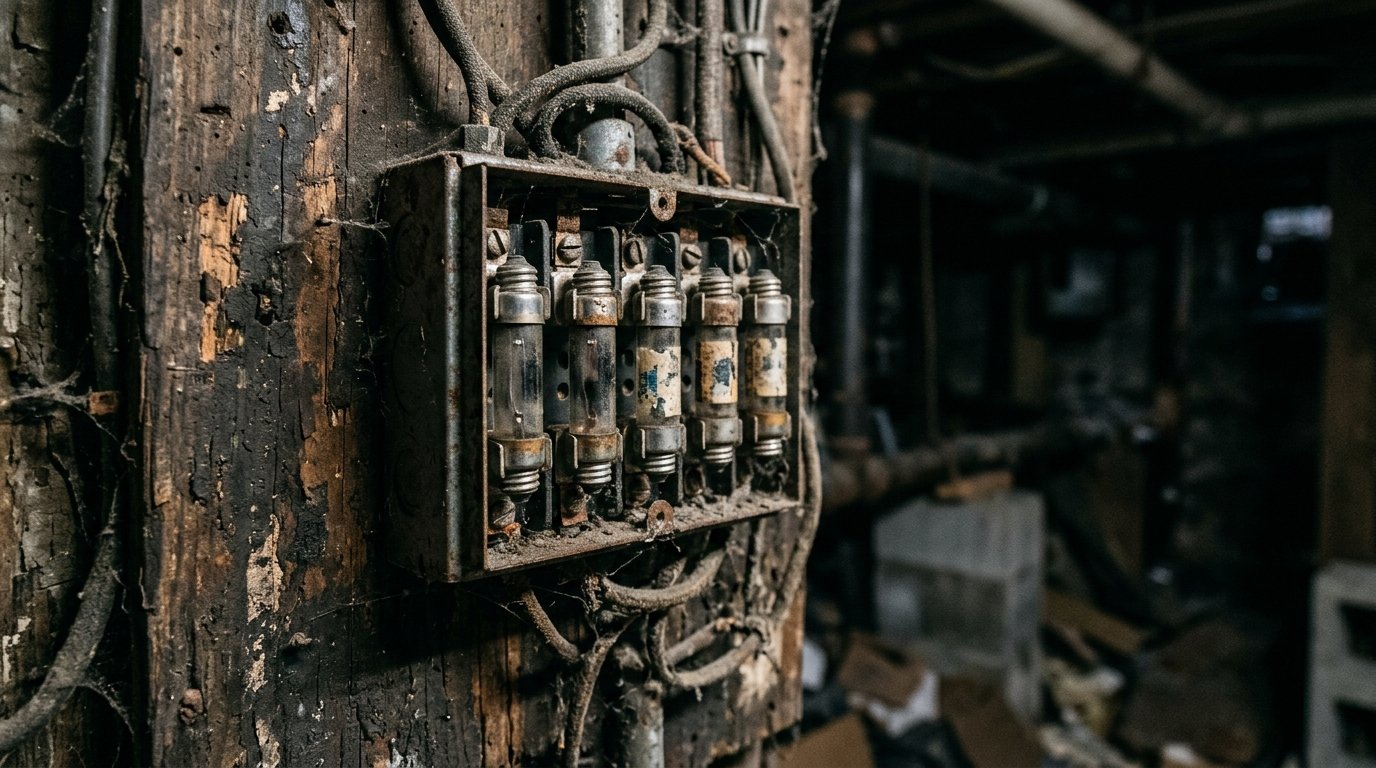
Most buyers of pre-1950 homes will apply for homeowner's insurance before or during the mortgage approval process. Lenders require a bound insurance policy before closing. If a buyer cannot bind coverage, the lender will not close, regardless of what the appraisal says about the electrical system.
Major carriers treat K&T as a high-risk underwriting factor. Allstate, Travelers, and many regional insurers either decline to write a new policy on homes with active K&T wiring or impose a surcharge and require removal within a specified period after binding. Some carriers will inspect and write a policy if a licensed electrician certifies the K&T has not been modified and is in serviceable condition. That certificate is not easy to get, and not every inspector will sign one.
The practical result: a conventional buyer who qualifies for a $220,000 mortgage may still lose the deal when their insurance agent declines to write the policy. This happens after inspections, after appraisal, and sometimes days before the scheduled closing. The seller prepared for the appraisal; nobody warned them about the insurance step.
Cash buyers do not carry a mortgage. They do not need a lender-required insurance binder. The insurance problem disappears entirely in a cash transaction, which is why the buyer pool for K&T homes concentrates heavily toward investors and direct buyers.
What FHA and VA Appraisers Actually Do
HUD 4000.1 Section II.A.8.a governs FHA appraisal requirements for electrical systems. The appraiser must verify the electrical service is adequate and the system has no visible deficiencies. When an appraiser notes frayed insulation, exposed splices, evidence of K&T being improperly extended with modern wire, or a wiring system that appears inadequate for the home's load, they note it as a required repair condition.
A required repair condition means one of three things: the seller repairs it before closing, the buyer switches to a different loan product, or the deal does not close. There is no negotiating around a required repair condition the way you can negotiate around a low appraisal.
VA Pamphlet 26-7 Ch.12 sets the same standard. The property must have an electrical system that meets standard utility needs safely. An appraiser who notes K&T deficiencies writes the same type of condition into the report.
K&T that is entirely intact, unmodified, and not covered with insulation sometimes passes FHA and VA appraisals without a required repair. The appraisal is a visual inspection, not an electrical inspection. But if the appraiser sees anything that raises concern, the condition appears in the report. And once it appears, it must be cleared before the loan closes.
State-Level Specifics Worth Knowing
The electrical code problem varies by what the state has adopted and when. The insurance problem varies by which carriers are active in a given market. In practice, the states where K&T creates the most friction for sellers are those with the oldest housing stock: the Northeast corridor, the Great Lakes states, and mid-Atlantic markets.
Massachusetts requires that any work performed on a home's electrical system comply with the current 527 CMR 12.00 code, which incorporates NEC. K&T that has not been touched can remain, but a permit for other electrical work in the same area can trigger a code upgrade requirement for that circuit. Connecticut, Maryland, and New Jersey follow a similar pattern under their state adoptions of NEC.
Delaware has a large stock of pre-1950 row houses and bungalows in Wilmington and Dover. The state electrical code adopts NEC through local jurisdictions. The practical constraint in Delaware is not the code but the insurer: mid-Atlantic carriers will want an electrical inspection before binding on homes with active K&T, and some will decline outright.
On disclosures: standard state seller disclosure laws apply. CA Civil Code 1102 (the Transfer Disclosure Statement), TX PropCode 5.008(b), Florida's Johnson v Davis doctrine, and NY RPL §462 all require sellers to disclose known material defects. If you know the house has K&T wiring, you disclose it. The question is not whether to disclose. It is how to price the house to reflect what the disclosure creates in terms of buyer-pool narrowing.
What Rewiring Costs and When the Math Works

A full rewire requires a licensed electrician, an electrical permit from the local authority having jurisdiction (AHJ), and a final inspection. The cost depends on square footage, accessibility, and how much of the K&T runs through finished walls that require opening and patching.
- Small house, under 1,200 sq ft, mostly accessible runs: $6,000 to $12,000
- Mid-size house, 1,200 to 2,000 sq ft, partial finished walls: $12,000 to $22,000
- Larger or fully finished house, over 2,000 sq ft: $22,000 to $45,000
A partial rewire covering only the kitchen, bathrooms, and the circuits FHA/VA appraisers are most likely to flag runs $3,000 to $8,000. It may not satisfy an insurer that requires complete removal, but it can clear an FHA required repair condition in some cases. Talk to the specific appraiser's scope before spending money on a partial solution, because a partial rewire that does not resolve the insurer's concern achieves nothing.
The break-even question: if the rewire cost is less than the discount the market applies to K&T-active homes, and you have the capital and the time, rewiring usually wins on paper. But those two conditions matter more than the arithmetic.
Worked Example: Wilmington, Delaware
A 1,450 square foot row house built in 1938 in Wilmington's Trolley Square neighborhood. Original K&T wiring throughout; the fuse box was replaced with a modern panel years ago, but the branch circuit wiring was never updated. The house is otherwise in decent shape, with a sound roof and functional plumbing.
ARV based on comparable sales of updated row houses in the area: $225,000.
Path A: Full rewire, then list. An electrician quotes $16,500 for a full rewire with permits. Work takes 10 to 14 days once the permit is issued. Add a 2-week permit wait, 30 days on market, and 30 days to close. Total timeline from decision to close: about 90 days.
At $225,000 sale price: 6% agent commissions and closing costs ($13,500), $2,250 in carrying costs during the sale, $16,500 rewire. Total costs: $32,250. Net: approximately $192,750.
Path B: Sell as-is to a direct cash buyer. A buyer who factors in the rewire cost will typically offer at 70 to 75% of ARV, reduced by the work scope. On a house that needs $16,500 in electrical work but nothing else major, an offer range of $160,000 to $172,000 is realistic. The gap against Path A: $20,750 to $32,750.
If you have $16,500 and 90 days, Path A wins by a material amount. If you do not have the capital upfront, or the 90-day timeline creates a hardship (you are under contract elsewhere, handling an estate, managing care responsibilities), Path B closes in 7 to 14 days with no repairs, no permits, no buyer-pool attrition, and no insurance negotiation. That tradeoff is the whole decision.
Who Should Not Sell Cash on This Issue Alone
If the K&T wiring is the only material issue on the house and the house is otherwise show-ready, rewiring typically pays. The buyer pool for a fully updated, properly wired older home is wide. FHA, VA, and conventional buyers can all close.
If the K&T is part of a longer list of deferred maintenance, the calculation changes. A rewire on a house that also needs a new roof, updated plumbing, and foundation work compounds the capital requirement and extends the timeline. Each repair reopens the buyer-pool question because other issues may still block FHA or VA approval even after the electrical work is done.
A direct cash sale is not the right answer for a house in genuinely good condition with a seller who has time and capital. If your house qualifies for a traditional listing after rewiring, that path will almost always net more than a cash sale.
If the condition list is long, the timeline is short, or carrying costs are real, a cash sale is worth pricing out. We buy houses in Delaware and all 50 states, as-is, with any wiring condition, without agents or repairs. For properties with major repairs stacked on top of an electrical issue, the math often closes the gap between the two paths. You can request a written offer at Trusted Homebuyers USA with no obligation to accept. Phone: 208-540-8257.
Common Questions
Can you sell a house with knob-and-tube wiring?
Yes. There is no federal or state law that prohibits selling a home with active knob-and-tube wiring. The constraint is practical: K&T narrows the buyer pool because many homeowner's insurance carriers will not bind a new policy on a home with active K&T wiring, and mortgage lenders require insurance before closing. Cash buyers face neither constraint.
Will FHA approve a house with knob-and-tube wiring?
Sometimes. HUD 4000.1 Section II.A.8.a requires the FHA appraiser to verify the electrical system is adequate. If the K&T is unmodified, not covered with insulation, and the appraiser notes no visible deficiencies, the loan can proceed. If the appraiser flags a deficiency, a required repair condition appears in the loan file, and the loan cannot close until that condition is cleared. There is no guarantee either way before the appraisal is done.
Does knob-and-tube wiring affect homeowner's insurance?
Yes, significantly. Many major carriers treat K&T as an underwriting risk and either decline to write a new policy or require removal as a condition of binding coverage. Because lenders require a homeowner's insurance binder before closing, an insurance refusal blocks any financed sale, not just FHA and VA transactions. Cash buyers do not require a lender-mandated insurance binder, so the insurance hurdle does not apply to them.
How much does it cost to rewire a house with knob-and-tube wiring?
Between $6,000 and $45,000 depending on house size and how much of the wiring runs through finished walls. A small house under 1,200 square feet with accessible runs in an unfinished basement is on the lower end. A fully finished two-story with original plaster walls is on the high end. A licensed electrician pulling permits from the local authority having jurisdiction is required in every state.