
You can sell a house with a lis pendens recorded against it. What you cannot do is find a financed buyer who can close. Title insurance companies will not issue a lender’s policy on property with an active notice of pending litigation, which removes FHA, VA, and conventional buyers from the picture entirely. Cash buyers remain. Whether a cash sale makes financial sense depends on how long the dispute is likely to run and what your carrying costs are while it does.
What a Lis Pendens Actually Is
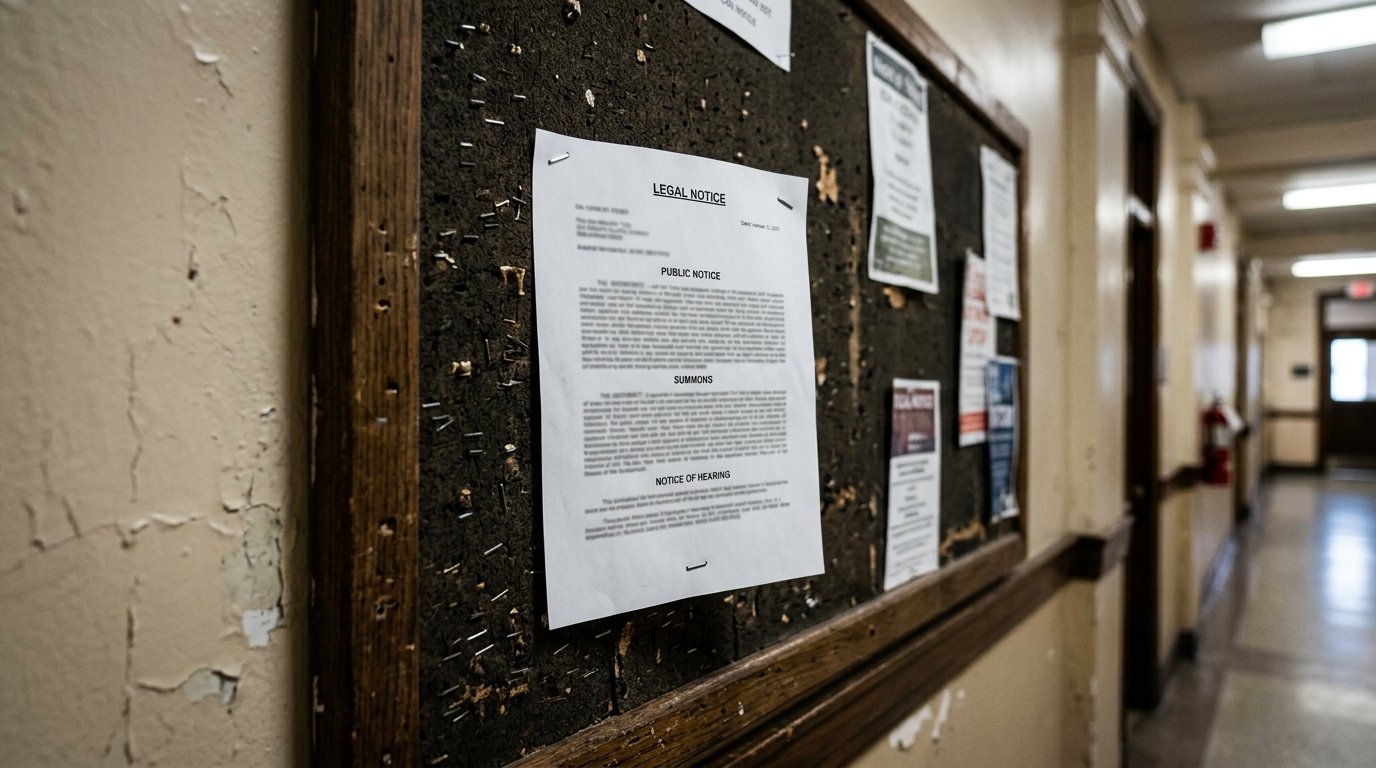
The Latin translates as “suit pending.” A lis pendens is a document filed at the county recorder or register of deeds that puts anyone searching the title records on notice that a legal claim involving the property is pending in court. It does not transfer title. It is not a lien. It is a notice, and that distinction matters: the lis pendens itself does not legally stop a sale, but its presence makes completing a financed sale nearly impossible.
The legal foundation is the doctrine of lis pendens: a buyer who acquires property while litigation over that property is pending takes the acquisition subject to the outcome of the case. Without a recorded notice, a buyer could argue they had no knowledge of the dispute. With it in the land records, that argument is foreclosed.
The filings come from many directions. A contractor claiming unpaid work is one of the most common, but a lis pendens can also come from a co-owner disputing a partition, a buyer who claims you breached a signed purchase agreement, a divorcing spouse trying to prevent a unilateral sale, or a lender initiating foreclosure. The nature of the underlying claim matters when you look at state expiration rules, so it is worth knowing what kind of dispute generated yours.
Why Financed Buyers Cannot Close
When a financed buyer closes, the lender requires a title insurance policy that protects its interest if a prior ownership claim surfaces after closing. Title underwriters review the full title search before issuing that policy. An active lis pendens is an unsettled claim to ownership. The underwriter does not know whether the plaintiff will win. It will not write a policy that promises to pay out if the plaintiff prevails and takes the property. No policy means no lender funding. No funding means no closing.
A cash buyer does not need a lender’s policy. A cash buyer can close on a property with an active lis pendens, accepting that the litigation outcome could affect the acquisition. An experienced direct buyer reviews the underlying dispute, assesses whether the claim has merit, and prices the litigation risk into the offer. The result is a lower number than a retail sale on clean title, but a number that leads to an actual closing.
State Rules on Expiration and Expungement
Most states let a lis pendens run until the underlying case resolves. A handful have created mechanisms that can shorten the timeline. If your property is in one of these states and your dispute falls into the right category, you may have more options than simply waiting.
Florida: 1-year cap with an important exception
Florida Statute §48.23(2) says a notice of lis pendens is not effective beyond one year from the commencement of the action, unless the court extends the period for good cause. If a contractor dispute or buyer breach claim goes unanswered for more than a year, it expires. The exception applies when the lis pendens is founded on a duly recorded instrument, such as a mortgage, or is based on a construction lien claim under Chapter 713. A foreclosure lis pendens grounded in a recorded mortgage does not auto-expire after a year. Know which category your dispute falls into before counting on the clock running out.
California: motion to expunge shifts the burden to the claimant
California Code of Civil Procedure §405.30 allows any party to file a motion to expunge a lis pendens at any time after it is recorded. The critical feature is where the burden of proof falls. Under §405.32, it is on the claimant, not the property owner, to establish by a preponderance of evidence that the underlying claim has “probable validity.” If the claimant cannot meet that standard, the court must grant the expungement. The person who filed the lis pendens does not get to keep the cloud on title simply because they filed first. This is the reverse of how most title disputes work in California, and it matters for how aggressively a property owner can push back.
New York: 3-year automatic expiration
Under CPLR §6513, a notice of pendency is effective for three years from the date of filing. After that, it expires automatically unless the court has granted an extension on the plaintiff’s motion. Extensions are available but must be sought and obtained before the original period ends. If the dispute has gone dormant and you are approaching the three-year mark, the expiration alone may be worth waiting for rather than taking a discounted offer.
States without auto-expiration
In Wyoming, Delaware, and most other states, there is no built-in clock. The lis pendens stays in the land records until the case resolves, the parties settle, or a court orders it removed. If a dispute goes dormant without a formal dismissal, the cloud can sit on title for years. That is the scenario where carrying costs do the most damage and where the financial case for a cash sale becomes strongest. For sellers in Wyoming and similar states facing an open-ended dispute with no statutory clock, the break-even math in the next section applies directly.
The Four Ways a Lis Pendens Gets Removed
- The plaintiff wins, loses, or the case settles and the notice is formally dismissed of record
- The plaintiff voluntarily withdraws the notice, sometimes as part of a negotiated payment or settlement
- A court grants a motion to expunge, as in California when the claimant cannot prove probable validity under CCP §405.32
- The notice expires under state statute: Florida after one year on non-mortgage claims under §48.23(2), New York after three years under CPLR §6513
If a tax lien or judgment lien is attached alongside the lis pendens, the page on selling a house with liens and back taxes covers how those separate clouds are resolved at or before closing.

Worked Example: New Castle County, Delaware
A homeowner in Wilmington contracts with a kitchen renovation company for $22,000. The work is completed, but the homeowner disputes the quality and withholds the final $14,000 payment. The contractor files a lis pendens against the property claiming the $14,000 owed.
The property has an after-repair value of $285,000. The homeowner has already purchased a new home and is now carrying both: $1,620 per month on the Wilmington mortgage, $310 in property taxes, and $170 in utilities, totaling $2,100 per month. Delaware has no automatic expiration on a lis pendens. The case will proceed through the Court of Common Pleas, which handles civil matters under $75,000. Typical timeline in New Castle County: six to eighteen months.
| Path A: Litigate, then list | Path B: Cash sale now | |
|---|---|---|
| Sale price | $285,000 (ARV) | $240,000 (cash offer) |
| Commission + closing costs | -$19,600 (6% + $2,500) | $0 |
| Attorney fees | -$5,000 to $9,000 | $0 |
| Carrying costs, 6 months | -$12,600 | $0 |
| Net, fast resolution (6 mo.) | $243,800 to $247,800 | $240,000 |
| Carrying costs, 15 months | -$31,500 | $0 |
| Net, slow resolution (15 mo.) | $224,900 to $228,900 | $240,000 |
The cash sale makes sense if you believe the dispute will take longer than about nine months to resolve. At $2,100 per month in carrying costs plus an estimated $6,000 in attorney fees, the nine-month mark is where the retail and cash paths deliver roughly the same net. After that, every additional month costs $2,100 against the cash sale baseline. For a property in Delaware, where lis pendens cases carry no auto-expiration and no statutory clock, that break-even is a real scheduling risk.
Who Should Not Take the Cash Sale
A cash offer is not the right answer for every lis pendens situation. The case for waiting and fighting the cloud is stronger when:
- The claim is clearly frivolous and your attorney believes expungement is obtainable within 60 to 90 days
- You are in Florida and the lis pendens is approaching the one-year mark on a non-mortgage, non-construction-lien claim
- You are in New York and the three-year expiration under CPLR §6513 is a few months away
- Your carrying costs are low because you are living in the house rather than double-carrying
- The retail-to-cash gap is large and your attorney fees estimate is small
A traditional sale nets more than a cash sale in almost every scenario where you have time, clean title, and no carrying cost pressure. The honest trade-off is a certain closing on a known date against a higher number that depends on winning or settling a legal dispute first. If you are not sure how strong the underlying claim is, your first call should be to a real estate attorney, not a buyer.
If you want to know what a cash offer looks like for your property before committing to either path, you can request a written offer here with no obligation. We buy houses in all 50 states and Washington, D.C., including situations where a lis pendens is still open at the time of closing.
Common Questions
Can you sell a house with a lis pendens?
Yes. A lis pendens does not legally prevent a sale. What it prevents, in practice, is any financed buyer from closing, because title insurance companies will not issue a lender’s policy on property with an active notice of pending litigation. Cash buyers are not subject to that constraint and can close on a property with an open lis pendens.
Does a lis pendens expire automatically?
It depends on the state. In Florida, a lis pendens not founded on a duly recorded instrument expires one year after the action is commenced under §48.23(2), unless the court extends it. In New York, a notice of pendency expires three years from filing under CPLR §6513. In most other states, including Delaware and Wyoming, there is no automatic expiration. The notice stays in the land records until the litigation resolves or a court orders it removed.
What is the difference between a lis pendens and a lien?
A lien is a creditor’s legal right against a specific asset, typically for an unpaid debt. A mechanic’s lien, a tax lien, and a judgment lien each give the lienholder a priority claim against the property. A lis pendens is not a claim against the property. It is a notice that someone has filed a lawsuit that could affect ownership. The underlying lawsuit might result in a lien or a title transfer, but the lis pendens only signals that the litigation exists.
Can a cash buyer purchase a house with a lis pendens on it?
Yes. A cash buyer acquires the property subject to the pending litigation, meaning the buyer accepts the risk that the plaintiff might ultimately prevail. A direct buyer like Trusted Homebuyers USA reviews the underlying dispute before making an offer and prices that litigation risk into the number. The acquisition can close while the case is still active. Call 208-540-8257 for a written offer on any property, regardless of the title situation.