
Yes. You can sell a house that has a tax lien or a judgment attached to it. What you cannot do is hand clean title to a buyer without dealing with the lien first. In almost every case, that dealing happens at the closing table, not before it. Here is how.
What a lien actually does to your title
A lien is a legal claim on a piece of property. It does not prevent you from selling, but it travels with the title until it is paid or released. Any buyer who takes that title also takes the lien, which means no lender will finance the purchase and most buyers will not close unless they can confirm it will be cleared at settlement.
The closing itself is the mechanism. The title company or settlement attorney collects the sale proceeds and, before a dollar goes to you, pays every lien in priority order. What is left is yours. This means you can list and sell even with a substantial lien attached, as long as the sale generates enough to cover it.
The complication is when the liens and the mortgage together are larger than the likely sale price. At that point you are in short-sale territory, which is a separate conversation requiring a real estate attorney familiar with distressed transactions.
The three liens you are most likely to be dealing with
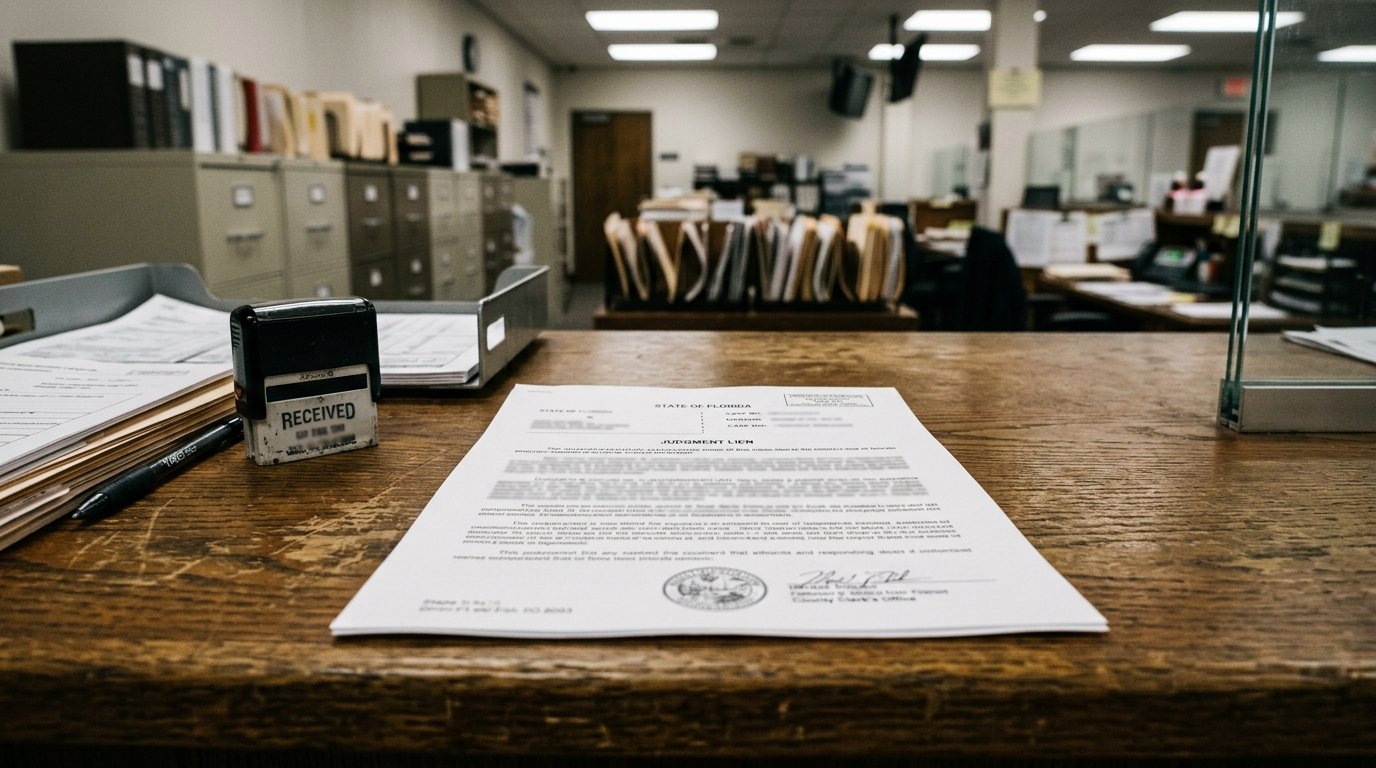
Federal tax lien (IRS)
Under 26 U.S.C. section 6321, the federal government automatically has a lien on all your property once the IRS issues a demand for unpaid tax and you do not pay. That lien becomes public record when the IRS files a Notice of Federal Tax Lien (Form 668-Y) with your county recorder. At that point it shows up in any title search and must be cleared before a buyer can take clean title.
The good news is that the IRS does not want to block a sale. Their preference is to get paid. Under 26 U.S.C. section 6325(b), the IRS can issue a Certificate of Discharge that releases a specific property from the lien even while the underlying tax debt remains open. The most common path is a discharge under section 6325(b)(2)(A): you agree that the IRS gets paid from the sale proceeds. You file Form 14135 (Application for Certificate of Discharge of Property from Federal Tax Lien), the IRS typically responds within 45 days, and the discharge allows closing to proceed. The tax debt is settled the day escrow closes. This is the standard path on most sales with a federal lien.
Property tax lien
Unpaid property taxes create a lien that, in most states, holds super-priority over every other encumbrance, including your mortgage. Your county tax collector records it and it shows up in any title search. Most title companies will not close without it cleared, and in practice it is paid from your proceeds at settlement before the mortgage company receives anything. If the taxes have been sold at a county tax sale, the mechanics become more complicated, but the same principle applies: the balance must be resolved at or before closing.
Judgment lien
A judgment lien arises when a creditor wins a civil case against you and records that judgment with the county recorder where your property sits. Priority among judgment liens is generally determined by recording date. Like a tax lien, a judgment lien attaches to your real property and must be paid or negotiated at closing. Judgment creditors are sometimes willing to accept a discounted settlement, particularly if they know they are junior to a mortgage and the equity in the property is thin. That negotiation has to happen before or at the closing, and the release must be documented so the title company can certify clear title to the buyer.
The math on a worked example
Take a house worth $240,000 at retail but needing $20,000 in work. There is an IRS lien of $47,000 and a mortgage balance of $110,000.
Option A: cash sale, as-is. A direct buyer offers $170,000 based on the as-is condition. At closing the IRS lien is paid $47,000 and the mortgage is paid $110,000. No commission, no repair costs. The seller nets $13,000 and the IRS is paid the same day escrow closes.
Option B: traditional listing, after repairs. The seller invests $20,000 in work, lists at $240,000, and accepts $235,000 after negotiation. At closing the mortgage receives $110,000, the IRS lien gets $47,470 (the original $47,000 plus roughly $470 in penalties accrued during the four months of listing and repair), the agent commission is $14,100, and closing costs total $2,400. The seller nets roughly $61,030.
That $48,000 difference is real. If you have $20,000 in reserves and four months to wait, Option B is the better financial outcome. If you do not have the repair money, the IRS timeline is creating pressure, or the lien is accruing penalties fast enough to erode equity, Option A clears the debt immediately and closes within 7 to 14 days. The lien is the same amount either way. What changes is who absorbs the carrying cost and whether you can fund the repairs that make Option B possible in the first place.
What happens at a cash closing when there is a lien

The process is not different in principle from a standard closing. The title company runs a title search, finds the lien or liens, and lists them as items that must be cleared to issue title insurance. The settlement statement shows every lien payoff as a line item. On closing day, the buyer's funds arrive and the title company disburses them in order: liens first, then the mortgage, then costs, then you.
For a federal lien, if you went through the Form 14135 process, the IRS sends a payoff figure and wire instructions. The title company wires the money directly. For a judgment lien, the creditor's attorney receives the agreed settlement amount. For a property tax lien, the county tax office receives the balance due.
With a cash buyer, there is no lender to satisfy. Conventional lenders require clear title before funding, which in practice means the lien has to be fully resolved before or at closing. A cash buyer removes that constraint because there is no underwriting file, no appraisal contingency, and no lender waiting for a clean title certificate. The cash buyer accepts the title situation as-is and closes once the lien is paid at settlement. That is frequently why sellers with complicated title situations end up choosing a direct sale over a traditional listing.
We buy houses in all 50 states and Washington, D.C., including situations involving an existing lien or back-tax balance. We can close in as little as 7 days once the payoff figures are confirmed with the lienholder.
Who should not take a cash offer to clear a lien
A cash sale makes the most sense when at least one of these is true: the house needs work you cannot fund, the IRS timeline is creating real pressure, or you need the debt cleared fast because penalties are accruing or a levy notice has arrived. If none of those apply, you are likely better off with a traditional listing.
Specifically, do not take a cash offer simply because a lien exists. If your house is in good shape, you have equity well above what you owe on all liens, and you have three to six months to spare, list it. The lien gets paid at a regular closing anyway and you will almost certainly net more. A direct cash buyer offers below retail because they are absorbing the as-is risk. If you do not carry that risk, you should not pay the discount that comes with it.
If the liens combined with the mortgage exceed what the property is worth, neither a cash buyer nor a traditional agent solves the problem without a short-sale negotiation with the lienholder. That is a different process and should involve a real estate attorney who handles distressed sales.
Check with a local real estate attorney before signing anything, particularly if there are multiple liens or the IRS has issued a levy notice. The mechanics above apply in most situations, but every lien has its own payoff procedure and some require additional steps before a closing date can be set.
If you want to know what a direct sale would net you given the liens on your property in Nebraska or any other state, you can request a written cash offer at no cost or obligation. The number that comes back is what the liens and the mortgage get paid from. If it does not work, you will know before you commit to anything. Call us at 208-540-8257 with questions.
Common Questions
Can you sell a house if the IRS has a lien on it?
Yes. The standard process is to file IRS Form 14135 for a Certificate of Discharge, which releases your specific property from the federal lien so closing can proceed. Under 26 U.S.C. section 6325(b)(2)(A), the IRS issues the discharge on the condition that the lien balance is paid from the sale proceeds. The IRS typically takes about 45 days to process the application. Once issued, the title company wires the payoff amount directly to the IRS at closing and the tax debt is satisfied.
Does a lien have to be paid before you can sell?
Not necessarily before the sale, but it must be resolved at or before closing. In most transactions, the title company pays the lien directly from the sale proceeds on the day you close. You do not need to pay it out of pocket beforehand, as long as there is enough equity in the sale price to cover it. If there is not enough equity, you are looking at a short sale, which requires separate negotiation with the lienholder.
What if the lien is larger than the equity in my house?
If the total of your mortgage plus liens exceeds what a buyer would pay, a standard sale cannot cover all of them. You would need to negotiate a reduced payoff with one or more lienholders, which is called a short sale. A real estate attorney familiar with distressed sales should handle that negotiation. A direct cash buyer can still be part of the solution if they will pay enough to cover the negotiated payoff figures, but the lender and lienholder agreements have to come first.
How does a judgment lien differ from a tax lien when selling?
A judgment lien comes from a civil court decision recorded against your property, while a tax lien comes from unpaid taxes owed to the IRS or a state or local government. The key difference in a sale is that judgment creditors are often more flexible on the payoff amount, particularly if they are in a junior position behind a mortgage. Tax liens, especially federal ones, have a more structured payoff process through the IRS Certificate of Discharge procedure. Both must be cleared to deliver clean title, but the path to resolution is different for each.